

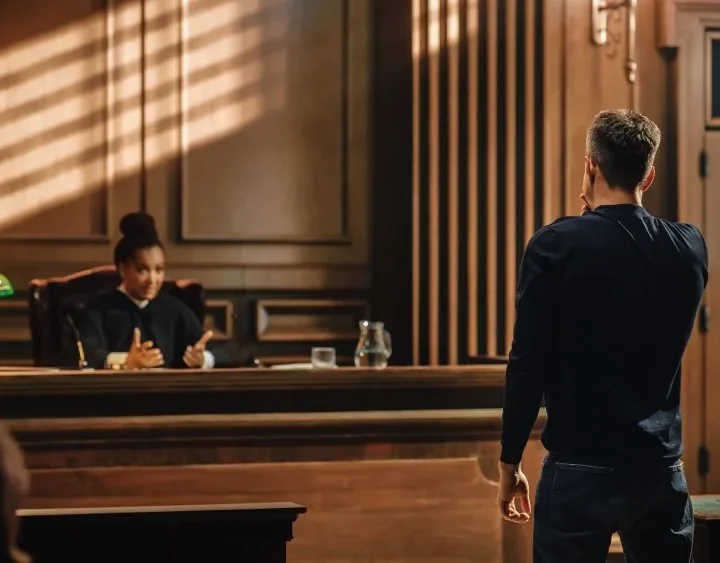
A death tied to careless conduct can turn an ordinary day into a felony case overnight. Involuntary Manslaughter is one of the hardest charges for families and defendants to process because the accusation often starts with one painful point: no one claims there was an intent to kill. The law still asks whether someone’s conduct crossed a line from mistake into criminal blame.
Across the United States, these cases can involve driving, workplace accidents, medical emergencies, firearms, drugs, unsafe property conditions, or reckless decisions during conflict. Federal law defines manslaughter as an unlawful killing without malice, and it separates involuntary cases from voluntary ones by focusing on unlawful acts or lawful acts done without due caution. That line sounds clean on paper. It rarely feels clean in court.
Good defense work begins by slowing the case down. Prosecutors may tell the story as if the death explains the crime by itself. Defense attorneys push back on that shortcut. They examine the conduct, the timeline, the science, the witnesses, and the legal standard before anyone treats tragedy as proof.
Why Involuntary Manslaughter Charges Depend on More Than the Death
A death is the emotional center of the case, but it is not the full legal case. Prosecutors must connect the defendant’s act or failure to act with the death, then prove the required mental state under the law that applies in that state or federal court.
That matters because American criminal law does not punish every fatal mistake as manslaughter. The law usually looks for negligence, recklessness, or conduct that shows a serious disregard for safety. Cornell’s Legal Information Institute describes involuntary manslaughter as negligently causing another person’s death, while the Model Penal Code treats criminal homicide through mental states such as purpose, knowledge, recklessness, and negligence.
How prosecutors frame the conduct behind the charge
Prosecutors often begin with a simple story. Someone died, someone made a dangerous choice, and that choice caused the death. The cleaner that story sounds, the more powerful it can be with a jury.
Defense attorneys know the danger in that simplicity. A fatal crash, for example, may involve bad weather, poor road design, confusing signage, mechanical failure, distracted pedestrians, or another driver’s conduct. A single label like “reckless driving” can hide ten facts that change the meaning of the event.
The same problem appears in drug-related cases. A person may be accused of supplying pills or substances that later caused a death. The prosecution may argue that the chain is obvious. A defense lawyer will ask harder questions about source, dosage, timing, medical history, toxicology, and whether another cause interrupted the chain.
Why intent is not the only issue
Many people hear “manslaughter” and assume the defense is simple because there was no plan to kill. That assumption can mislead a defendant fast. Lack of intent helps separate the case from murder, but it does not automatically defeat the charge.
The real fight often centers on the defendant’s level of awareness. Did the person understand the risk? Should they have understood it? Was the conduct a gross departure from what a reasonable person would do, or was it a bad outcome from ordinary human error?
This is where the defense can shift the case. A tired driver who misjudged a turn is not the same as a driver racing through a school zone. A homeowner who missed a hidden hazard is not the same as one who ignored repeated warnings. Small factual differences can change the legal category.
How Defense Attorneys Attack Causation and Evidence
The prosecution must prove more than bad judgment. It must prove that the defendant’s conduct caused the death in a legally meaningful way. That is often where the strongest defense work begins.
Causation is not always as direct as it looks. A person can act carelessly without legally causing the fatal result. Defense attorneys search for gaps between the act and the death, because those gaps can turn a serious accusation into a weaker case.
Why the timeline can make or break the case
A strong defense timeline does more than list events. It tests the prosecution’s theory minute by minute. In a hospital-related case, the order of symptoms, treatment decisions, lab results, and emergency response can matter more than any dramatic courtroom statement.
Traffic cases work the same way. A prosecutor may say a driver caused a fatal collision. The defense may reconstruct speed, braking distance, visibility, road surface, traffic-light timing, and vehicle condition. One camera angle may support the state. A second camera may tell a different story.
This kind of work is slow and unglamorous. It can also be decisive. The public often sees the charge first and the evidence later. Defense lawyers try to reverse that order inside the courtroom.
How expert witnesses reshape the facts
Expert witnesses can change the center of gravity in manslaughter cases. Accident reconstructionists, toxicologists, medical examiners, engineers, firearms experts, and human-factors specialists may all play a role depending on the facts.
A medical examiner may list a cause of death, but that does not end the inquiry. The defense may question whether an underlying condition, delayed treatment, mixed substances, or another injury contributed to the fatal outcome. In some cases, the question is not whether the death happened. Everyone agrees it did. The question is whether the law can fairly attach it to the defendant.
Defense attorneys also look at the limits of expert certainty. A conclusion expressed with confidence may rest on assumptions. If those assumptions are weak, incomplete, or based on poor data, the defense can expose that weakness without needing to prove an entirely different theory.
The Role of Negotiation, Motions, and Trial Strategy
Not every manslaughter case goes to trial. Many turn on pretrial motions, charge negotiations, evidentiary rulings, and sentencing exposure. The best defense strategy often depends on knowing when to fight publicly and when to narrow the case quietly.
Defense attorneys respond to Manslaughter Charges by building pressure at several points. They challenge what evidence comes in, what statements stay out, what experts can say, and whether the prosecution can meet the legal standard before a jury hears the full case.
How pretrial motions can weaken the prosecution
Pretrial motions can decide the shape of the battlefield. A defense lawyer may ask the court to suppress statements, exclude unreliable expert opinions, limit inflammatory photos, or block evidence that creates unfair prejudice.
This matters because manslaughter cases carry deep emotion. Jurors may feel the loss before they understand the law. Courts try to balance that emotion against fairness, but defense attorneys must force the issue. Evidence that adds grief without proving an element of the offense can distort the trial.
A motion can also reveal how prepared the prosecution is. When the state must defend its evidence before trial, weak assumptions come into view. Sometimes that pressure leads to reduced charges. Sometimes it leads to dismissal of certain theories. Sometimes it simply gives the defense a clearer map.
Why plea discussions are not always surrender
Plea negotiations are often misunderstood. A defendant may have strong defenses and still face real risk at trial. A defense attorney must weigh the evidence, the sentencing range, the judge, the jury pool, the victim-impact evidence, and the client’s personal circumstances.
A negotiated resolution may reduce a felony level, avoid a harsher sentence, or shift the charge to a less severe offense. In vehicular cases, for example, the difference between a prison-heavy felony and a lesser driving-related offense can shape the rest of someone’s life.
Still, a plea should never come from panic. It should come from a clear-eyed view of the case. The defense lawyer’s job is not to sell fear. It is to explain risk with enough honesty that the client can make a decision without being crushed by the moment.
What Defendants and Families Should Understand Early
The early days after an arrest or investigation can damage a case. People talk too much, delete messages, explain themselves online, or contact witnesses because they believe silence makes them look guilty. That instinct can cause real harm.
Defense attorneys usually want control over communication from the start. The goal is not to hide the truth. The goal is to stop confusion, grief, fear, and public pressure from becoming evidence.
Why silence and documentation both matter
Silence protects a defendant from accidental damage. A statement made in shock can sound cold, inconsistent, or dishonest later. Police interviews are not casual conversations, even when the tone feels polite.
Documentation matters for the opposite reason. Defense teams need records before they disappear. Phone data, dashcam footage, workplace logs, maintenance records, medical files, text messages, photos, and location data can all help explain what happened. Waiting too long can cost the defense evidence that no witness can replace.
Families should also avoid trying to “fix” the situation through private outreach. A message to a witness or grieving family can be misread as pressure. Even a kind message can create problems if the case is active.
How public pressure can distort the case
High-profile manslaughter cases can become public arguments before they become legal cases. News clips, social media posts, and neighborhood rumors often flatten the facts. People choose sides fast when someone has died.
That pressure can affect charging decisions, plea offers, and jury perception. Defense attorneys may respond by seeking gag orders, changing venue, limiting public statements, or preparing jury questions that identify bias. The courtroom cannot erase public emotion, but it can test whether jurors can follow the law.
The counterintuitive truth is that a quiet defense is not always a weak defense. Sometimes the smartest move is to let the evidence develop while everyone else talks. A public fight may feel satisfying for a day and damaging for months.
Conclusion
A manslaughter case asks the legal system to do something painful: separate moral grief from criminal proof. That separation is never cold. It is necessary. A death deserves seriousness, but seriousness does not mean skipping the elements of the charge.
For defendants, the first lesson is simple. Do not assume the facts speak for themselves. They rarely do. Every timeline, witness statement, lab result, expert opinion, and police report needs to be tested before anyone treats the prosecution’s version as final.
Involuntary Manslaughter cases can turn on one overlooked detail: a missing video, an unclear medical cause, a flawed reconstruction, a bad assumption about risk, or a witness who remembered the loudest fact instead of the most accurate one. That is why defense work must begin early and move carefully.
Anyone facing this kind of accusation should speak with a qualified criminal defense attorney before making statements, sharing records, or responding to pressure from police, media, or family. The next move should protect the case, not satisfy the moment.
Frequently Asked Questions
What is the main difference between involuntary manslaughter and murder?
Murder usually requires intent to kill, intent to cause serious harm, or extreme disregard for human life. Manslaughter involves a lower level of blame. In many cases, the death was unintended, but prosecutors argue the defendant acted with criminal negligence or recklessness.
Can someone go to prison for an accidental death?
Yes, if prosecutors prove the accident involved conduct that crossed into criminal negligence or recklessness. A tragic result alone is not enough. The state must show that the defendant’s behavior was legally blameworthy, not merely careless in an ordinary way.
What evidence helps defend against a manslaughter charge?
Helpful evidence may include video, phone records, medical reports, toxicology results, maintenance records, witness statements, expert analysis, and accident reconstruction. The strongest evidence usually explains the full context, not only the final moment before the death.
Do all states define manslaughter the same way?
No. States use different statutes, labels, sentencing ranges, and mental-state requirements. Some states separate vehicular manslaughter, criminally negligent homicide, and reckless homicide. A defense strategy must match the exact law in the court where the case is filed.
Should a defendant talk to police after a fatal accident?
A defendant should speak with a criminal defense attorney before giving any statement. Even honest explanations can create problems if the person is scared, confused, injured, grieving, or unaware of the legal meaning behind certain words.
Can expert witnesses help in a manslaughter defense?
Yes. Experts can explain accident mechanics, medical cause of death, toxicology, firearms issues, workplace safety, or human reaction time. Their role is often to test whether the prosecution’s theory fits the evidence or rests on weak assumptions.
Is a plea deal common in manslaughter cases?
Plea deals are common, but they should never be automatic. A fair offer depends on the strength of the evidence, possible defenses, sentencing exposure, and the client’s goals. A defense lawyer should compare the offer against the real trial risk.
What should families do after someone is charged?
Families should avoid public arguments, witness contact, social media posts, and informal explanations of the case. The best support is practical: help preserve records, connect the defendant with counsel, and let the defense attorney manage communication.